Just click for films.

Sunday, 7 May 2017

Coaxial Optics.

Inertial navigation system (INS) has received wide attention in recent years because it can achieve high precision without using costly inertial sensors. However, the introduction of the turntable causes additional errors, including mounting errors between the inertial measurement unit (IMU) axes and the turntable axes. Analysis, calibration and compensation of the mounting errors are necessary in rotational INS. In this paper, the mounting errors are introduced into the sensor model. 
What happens in a dual-axis rotational INS. Analysing the improved model indicated that occur. Some mounting errors' effect on the IMU errors is inconspicuous, but the effect on the output attitude is significant. If the output attitude is not required, the mounting errors can be ignored; conversely.
It becomes important to calibrate and compensate for such errors. A calibration method for the mounting errors is designed using the thin-shell (TS) algorithm, and the method's precision has the same order of magnitude as the residuals of gyro misalignment in the simulation test. Laboratory experimental results validate this theory.

Thursday, 2 March 2017

Shielded Ring.

A starter ring well what are they like as they appears. Once the ring projects onto the palm of the hand with its projector. It's uniquely phone like. With an added radar detector. This could shock the finger from its fitting wall into a movement, as a response.
It may not need bring it's occupant, out of a dangerous situation. The ring can have its own shielding. I know where is all this communication stuff going to fit on it? Well its completely like a phone. As it has its own storage for applications this just slips in. Use its application as game's from game's loft. As with the five fingers onto your palm screen like a phone. Like the Nokia 222 system of programming. I like idea of Google Doc's where one wrightings with hand movements can recorded. Now with all of your notes onto documents just press print.
The ring has five components it's electronics twist this into place it's battery at its top. It's nano SIM and micro memory card. All can be dismantled to use in any sized casing. This ring can play from, as it has internet from u tube, with mp3 as one uses the Bluetooth headset. Works off a plug in earphone recharger. Give battery guy a twist in its cute diamond like battery keeps going. Straight from its charger just use it. As a product it will compete with more convenient glasses. With its phone number, ear phones be completely be like battery a source.
Apple have ensured that smart watches and fitness trackers create the most buzz in the wearable tech space, smart jewellery is quietly building up a solid following. This is done by offering a more fashionable and discreet alternative for both women and men. Due to their small size, smart rings in particular are tricky to get right. Many startups are running into legal or financial trouble too. With regards to build aformula. Wise labs trawled the world of wearables to seek out the most interesting smart rings - the good, the bad and the ugly.

Tuesday, 16 December 2014

Advancing technologies.

When computing of 386 IBM met dos the internal programming language, as all needed a zip file but how would this operate as IBM OS, Microsoft windows and apples base Linux operating systems offered similar products as none were really media consumer friendly picture new cleaner.
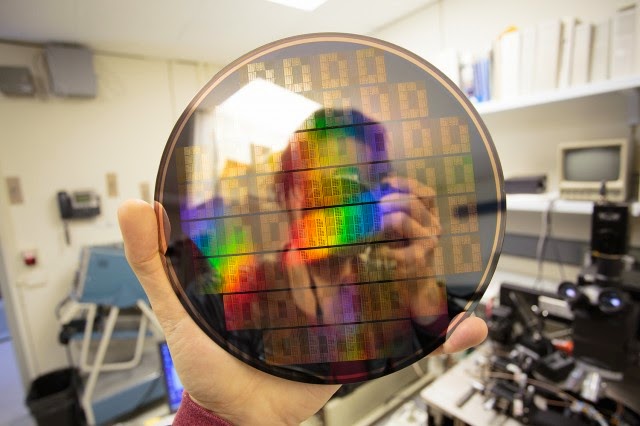
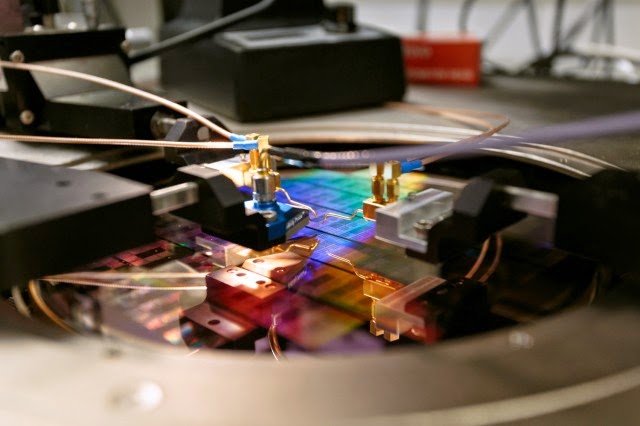
Engineers at IBM Research have built the world's most advanced Graphene-based chip, with performance that's 10,000 times better than previous Graphene ICs. The key to the breakthrough is a new manufacturing technique that allows the Graphene to be deposited on the chip without it being damaged (its something that has been very hard to achieve). Perhaps more importantly, though, this new method is actually compatible with standard silicon CMOS processes. In short, we are closer than ever before to realizing a commercial graphene computer chip. As luck would have it, I actually got to hold a wafer of these Graphene chips when I visited IBM Research in December. That's my hand in the photo up there and the shot below of a Graphene wafer being tested was taken by me. I also got to see the machines and tools that IBM uses to create bulk Graphene, and the CMOS fab where the underlying silicon wafers are produced. In short,
As wise labs is rather uniquely positioned to tell you all about IBM's Graphene chip - including the stuff that is not mentioned in the press release. How IBM Research built a Graphene integrated circuit. What IBM Research has built is a silicon chip, on a standard 200mm silicon wafer, using a standard CMOS fabrication process. This chip, which is a radio frequency (RF) receiver, is just a normal chip, with resistors, capacitors, and transistors - except for one bit: the transistor channels are made of Graphene. The chip's function is very rudimentary: It receives and restores wireless signals in the 4.3GHz range. What's the breakthrough, then? Basically, previous attempts at building GFETs (Graphene field-effect transistors) have used standard BEOL (back end of line) processes, where the active components (the transistor and its Graphene channel) are built on the wafer first, and then the rest of the passive components (capacitors, resistors) and interconnects are added.
As wise labs highlights some of problem is, due to Graphene's weak adhesion and fragile single-atom-thick composition, this process damages the GFETs. To get around this, IBM builds the passive components first, and then only deposits a layer of Graphene right at the end, to complete the fabrication of the transistors. It's a relatively simple change, but it works rather well. [Research paper: doi: 10.1038 / ncomms 4086 - "Graphene radio frequency receiver integrated circuit"] A wafer of Graphene chips, being tested at IBM Research In case you were wondering, the Graphene is grown in a furnace. A copper foil is placed in a furnace at 1,050C (1,922F) with an atmosphere of methane, resulting in a single layer of Graphene being deposited on the foil. The copper is dissolved away in a bath, leaving a layer of Graphene floating there. The silicon wafer, with all the passive components already in place, is then used to "scoop up" the Graphene layer out of the bath. (Bear in mind that the Graphene is transparent, too.) This is currently the easiest way to grow large amounts of Graphene, but the IBM engineers told me that the quality of Graphene grown in this way is not great, and that having to destroy the copper substrate is expensive and inefficient.
Moving forward, it's important to note that we're still very much talking about an analog chip. IBM Research still has not found a way of giving Graphene the all-important band-gap that is required for the fabrication of digital logic, and thus Graphene-based computer processors.
Here for next-gen processors, IBM seems to be focused on carbon nanotubes, which can have a band gap, over Graphene. (More on that later, when I write up my trip to IBM Research.) Assuming we can one day create large quantities of high-quality graphene, though, there are plenty of radio and optical applications that could benefit - in theory, Graphene is capable of operating at frequencies as high as 500GHz, well beyond any other material currently used in RF applications.

Saturday, 11 October 2014

Holographic.

These concept holograms, can either be sprayed with chocolate and cooled instantly. As the light milk chocolate is sprayed over a round holographic image, it is similar to printing.
To spray is much quicker than printed process, so one can open their mouth and swallow each round chocolate. It the new consept in chocolate machines,as a concept designed by wise. Here is latest to smart technology. Almost like lolly pop delivery system that floats with a holographic image, small minute round chocolates floats right over to taste. This technology is rather easy as a concept. Like wise many other labs are trying to prefect these techniques. As machines have to have a bar of chocolate to start from. Maybe in a supermarket area as the first generation machines make there debut, sales becomes one of the complex parts of this finalized process.
What about Skype having own friend at table chattering the news well natural reader. This is here as hear the news and see the caricatures as that talk from flat screen. So when will all this exist? There are varied prototypes in production presently, but small block board games are most lightly to be the most attractive. 
   
Some new development such as MisTable developed as a tabletop. This system combines a conventional horizontal surface with interactive personal screens between the user and the tabletop surface. These personal screens, built using fog, both are see-through and reach-through. Being see-through provides direct line of sight of the personal screen and the elements behind it on the tabletop. Being reach-through allows the user to switch from interacting with the personal screen to reaching through it to interact with the tabletop or the space above it. The personal screen Allows a range of customization and novel interactions. Such as presenting 2D personal contents on the screen, 3D contents above the tabletop. Or just augmenting and relighting tangible objects differently for each user. Besides, having a personal screen for each user this allows to customize the view of each of them according to functional their identity or preferences. Finally, the personal screens to preserve well-established tabletop interaction techniques like touch and tangible interactions.

Friday, 5 September 2014

Inflatable Cameras.

With a plastic sealer, these have two hot plates and are used to seal food. This Chinese engineer obsessed with the idea of reinventing an aircraft. He has unveiled an 'indestructible' inflatable fun plane can be folded up and put in a suitcase when its not needed as revealed to Wise labs. His plane could be used for a variety of missions and will not break if it falls out of the sky. This Chinese engineer obsessed with the idea of reinventing an airship has unveiled an 'indestructible' inflatable.
A plane can be folded up and put away. Desplayed Tianjin International Exhibition UAV, Bingyan Zhang, 69, started working on His designs as an engineer with the Henan Normal University, Xinxiang, China in 1993. He Has now unveiled the results of more than 20 years of research in creating a 'soft body airplanes' at the Tianjin International UAV (Unmanned Aerial Vehicle) Exhibition. His designs, looking a bit like an inflatable lilo, have nothing inside them but air as this drone is scheduled for the planet Venus.

As new aircraft sensor designs could have a human-like 'skin' for aircraft - Allowing them to detect any damage and 'feel' the world around them - is being developed by British experts. Engineers at BAE Systems' Advanced Technology Centre are Investigating a 'smart skin' concept Which could be embedded with tens of Thousands of micro-sensors. When applied to an aircraft, it will enable it to sense wind speed, temperature, physical strain and movement, more accurately than current sensor technology allow. The evolutionary 'smart skin' concept will enable aircraft to continually monitor their health. reporting back to wise labs on potential problems before they become significant. These plans, called the Sf-1 Has an average speed of 120 miles (120km) per hour and can fly up to 3,000 meters (10,000ft) with a maximum load of 25 kg (55lbs).
That aside from the engine powers a rear-mounted propeller and wheels at the bottom the entire vehicle is made ​​of a rubber composite and a high-strength fiber material. The flexibility of the plane That means clustering Also, even if it falls from the sky, Likely it will survive an impact with the ground. costs between £ 20,000 and £ 30,000 ($ 32.400 and $ 48.600) to make. One of the designs was spectacular Able to reach speeds of up to 120 miles (190km) per hour, weighing 90kg (200lbs) with a six-meter (20ft) wingspan.  developed a special high-strength fiber material Which Has a tensile strength of 10 to 15 times of steel That,' he said. No matter what happens, the aircraft will not be damaged in a collision under any Circumstances and that's the best way to protect human life here is an inflated urban car-park garden.'
The spectacular plane can reach speeds of up to 120 miles (190 km) per hour, with one of these designs weighing just 90 kg (200 lbs) and with a six-meter (20 ft) wingspan.
'As developed a special high-strength fiber material Which Has a tensile strength of 10 to 15 times of steel That,' said Bingyan. developed a special high-strength fiber material Which Has a tensile strength of 10 to 15 times of steel That,' said Bingyan. Pictured here is the engine of the inflatable plane created by Chinese engineer Zhang Bingyan. Now that's an airplane! Homemade inflatable drone Reaches speeds of 120mph. Chinese engineer Zhang Bingyan Has His novel plane design unveiled Called the Sf-1 the aircraft is made ​​of a rubber composite material. It has a maximum speed of 120 miles (190km) per hour and can fly up to 3,000 meters (10,000ft) with a load of 25 kg (55lbs) Bingyan says it could be used for air photography and remote monitoring.
The flexibility of the plane means clustering as also it will survive falls from a great height. Dreams of airships float through the skies these have been largely confined to the scrap heap in recent times due to unpredictability in any wind condition, but as aircraft design with other technologies may solve this less expensively. Pictured above is the engine of the inflatable plane created by Chinese engineer Bingyan Zhang graduated from Beijing Institute of Technology in the 1960s and was later assigned to the Chinese Commission of Science and Technology and Industry for National Defense to be engaged with research. As with some two piece balloons with an engine could achieve high altitude flight as this give futurists near space flight experience or as with sport component toys 'casual photography'.

Saturday, 23 August 2014

Printed Buildings.

Wow it's easy if you have a rented printer and mix as these houses are the perfect solution for a homely life, where just add paint. How something so simple could have been overlooked by turf cutters, as china proves this is how its done. Quality over cost with no waste as these compact houses were constructed using waste materials. In  which was pumped out into layers - and the properties were said to have been created for less than $ 5,000 (£ 2.974) each. Press print is a company in China Appears to have built 10 detached houses Within 24 hours, using giant 3D printers and a quick drying concrete mixture composed of waste materials. The technique could one day be used to construct skyscrapers and villas, according to this ambitious company. Using giant 3D printers and a quick drying concrete mixture composed of some waste materials. The technique could one day be used to construct skyscrapers and villas, according to this ambitious firm. These giant 3D Printer Creates 10 full-sized houses in a day bungalows built from layers of waste materials cost less than £ 3,000 each.
Houses were built using a mixture of waste material pumped into layers. As each house is thought to cost less than $ 5,000 (£ 3,000) to construct, meaning affordable housing could be built faster. Four huge printers measuring 105ft long, 33ft wide and 22ft tall were used to make the bungalows. Technique could one day be used to build complex skyscrapers and villas. It is Said That a man's home so is his castle - but he could soon be presiding over a 3D-printed bungalow. A company in China claims to have built 10 detached houses Within 24 hours, using the modern technology. It Has Been Reported That 10 houses were 3D printed in just 24 hours. They are constructed from waste material pumped out of a nozzle So that walls are built up layer by layer. The recipe for the quick drying cement is top secret, but is Entirely made ​​from recycled materials.
The cost of each small dwelling is less than £ 3,000 ($ 5,000). The buildings were printed by four vast machines at the Shanghai Hi-Tech Industrial Park. The new construction technique means clustering affordable housing could be created faster than ever before, and there are even hopes skyscrapers could be Erected using the same technology. As four huge printers measuring 105ft (32 meters) long, 33ft (10 meters) wide and 22ft (6.6 meters) tall were used to make the bungalows, China's Xinhua news agency reported. Chinese firm to Win Sun piped mixture of cement and construction waste to build up layer-by-layer walls During The speedy construction process. Hi-tech walls: Chinese firm Sun piped Win a mixture of cement and construction waste to build up layer by layer walls (pictured) in a speedy construction process That could transform the way affordable homes are built.
Hi-tech walls as this Chinese firm 'Sun' piped there award winning mixture, its a cement mix and use of elevated construction crane. producing no waste builds up quick drying layer by layer walls. These pictures showing a speedy construction process. This could transform the way affordable homes are built. Cheap and cheerful homes. Each house can be printed for less than $ 5000 (£ 3000) Because the process is so fast and there are few labor costs one man process apart from fittings and electrics. Its cheap and cheerful as each house can be printed for less than $ 5000 (£ 3000). This because the process its so fast and there are few over running costs such as delays or hazards. The recipe for the quick drying cement is top secret, but is Entirely made ​​from 'recycled materials'. The fruits of their labors stand in the Shanghai Hi-Tech Industrial Park, in the city's Qingpu district. Currently, Building Regulations in China prevent the creation of 3D printed multi-storey structures. The photographs of the concept houses look as if they have a room with a tall roof, with a horizontal support for the single-storey house's roof. Building regulations prevent the creation of any 3D printed multi-storey structures as of yet with a steal skeleton this may change. The houses as (pictured) look as if they have a tall room, with a horizontal support for the single-storey house's roof
First for electronic mail as the producer Yihe Winsun chief executive told Wise Labs: 'We can print any digital design building for our customer, as all they have to do is bring there design to us. It's fast and cheap on a lorry. Each house can be printed for less than $ 5000 (£ 3000) Because the process is so fast and there are few labor costs. But Has Been designing 3D printed houses for 12 years and said it is 'environmentally friendly and cost effective,' Compared to traditional building techniques. 'To Obtain natural stone, we have to employ miners, dig up blocks of stone and saw them into pieces. This badly damages the environment. As these structures are safe new designs will allow for some stunning architectural views are you excited as it gives pounds for your buck.
'But with the 3D printing, we recycle mine tailing into usable materials. They can print any digital design buildings with our customers bring us. It's fast and cheap. Quality checks are currently Conducted by examining each piece of the structure as it is printed out, Have to be standard stringent checks if people are to live in these new buildings in the future. But as he said to wise labs he hopes the technology will one day be used to build skyscrapers and will work on creating a whole villa for the company's next project. China Has Announced the first 3D printed house project will be located in Qingdao, a major city in Shandong Province, Eastern China, Which Has a population of almost nine million. Speedy the quick drying cement is piped with multi-directional sprays and the recipe is top secret,  Recycled materials speedy this makes for a quick drying cement, as it is piped with multi-directional sprays.

Sunday, 10 August 2014

Laser Minting.

Wise labs Plan has shown 'laser minting' to be a perfect way for to obtain metal from asteroids. This is where a mixture of metals could be returned swiftly to International Space Station or Earth. This could be done with the use of thermal dynamic electromagnets and some laser blasting along surface area of any celestial object. As these deposits could be used to manufacture metals of varied constancy. These could then be lifted into atmosphere of the said planet Venus.
Hoisted from the Planet Venus with the use of two ballasts from a small robotic platform at safe height. As there is no need to land on the surface of Venus. A balloon structure could keep within reasonable safe highs of these Plautus Peeks. This is where a Venusian space station could be built using balloons to ferry contents to sorter platform. As with a tether these contents could be flown towards a space-station by the use of small propeller, as in model balloon or to jet to a point. To just be collected by a flight path, like that of a Venus Express although space has no gravity.
Although this process sounds complex, balloons easily float to and from a tether platform sorted and transported.
These Venusian deposits could be laser minted into hollow metal rods. Many plans have shown 'laser minting' is perfect for asteroids. This is where a mixture of metals could be returned swiftly to Earth or like demos used to build dome structures.
Although wise labs has 3d printed version metal minting where structure could be strengthened and molded into egg like structure creating a space station. Venus has oxygen and metal and list goes on. laser minting could be used obtain water vapor as with holding tanks from a balloon robot. Some plans for a Planet Venus Rover as past attempts had been melted crushed and blown all detail be published science Magazine above just click.